Whether you’ve just bought trousers that puddle around your ankles or you’ve lost weight and your favourite jeans now gap at the waist, you’ve probably asked yourself the same question millions of people in the UK ask every year: should I fix this myself, or take it to a professional?
This guide covers everything you need to know about clothing alterations in the UK — from realistic costs and what you can expect to pay, to an honest breakdown of when a DIY hem makes sense and when you’re better off trusting a skilled tailor. We’ll also tackle one of the most commonly searched questions in tailoring: can jeans actually be taken in at the waist? (Spoiler: yes, but it’s more nuanced than you’d think.)
In This Guide
How Much Do Clothing Alterations Cost in the UK?
Let’s start with the question that brings most people to this page. Alteration pricing in the UK varies depending on the garment type, the complexity of the work, and — perhaps more than you’d expect — your location. London tailors typically charge a premium over those in smaller cities, largely because of higher overheads.
To give you a realistic picture, here’s a breakdown of typical prices you can expect in 2026, based on standard (non-rush) turnaround times:
| Alteration Type | Typical UK Price | Complexity |
|---|---|---|
| Shorten trousers (plain hem) | £8 – £15 | Simple |
| Shorten trousers (original hem preserved) | £12 – £20 | Simple–Medium |
| Shorten sleeves (shirt or blouse) | £10 – £20 | Simple–Medium |
| Shorten sleeves (jacket, with buttons) | £16 – £35 | Medium |
| Take in waist (trousers or skirt) | £18 – £30 | Medium |
| Take in jeans at the waist | £20 – £35 | Medium–Complex |
| Replace zip (trousers) | £18 – £25 | Medium |
| Replace zip (jacket or coat) | £30 – £50 | Medium–Complex |
| Take in dress (sides) | £18 – £30 | Medium |
| Shorten a dress (plain) | £15 – £25 | Simple–Medium |
| Shorten a lined jacket or coat | £40 – £60 | Complex |
| Take in a jacket (body) | £30 – £50 | Complex |
| Wedding dress alterations (multiple) | £80 – £300+ | Complex |
| Button replacement | £2 – £5 | Simple |
📍 The location factor: If you’re in central London, expect to pay 20–40% more than the prices listed above. A simple trouser hem that costs £10 in Manchester might run to £15–18 in Mayfair. That said, quality varies everywhere — a higher price doesn’t always mean better work.
What affects the price?
Several factors push the cost of an alteration up or down. Fabric type is a big one — delicate materials like silk, chiffon, or heavily beaded fabrics require hand-stitching and significantly more time. Garment construction matters too: a lined jacket has far more layers to work through than an unlined cotton shirt. The number of alterations on a single garment can sometimes earn you a small discount, and rush services (24–48 hour turnaround) typically add 30–50% to the standard price.

Hemming Trousers at Home vs Professionally: An Honest Comparison
Hemming is the single most common alteration, and it’s the one most people consider doing at home. Fair enough — on the surface, it’s just shortening fabric and stitching it up. But the gap between a home hem and a professional one is wider than most people expect, especially on certain fabrics.
Here’s an honest look at when each approach makes sense:
✂️ Hemming at Home — When It Works
DIY hemming is perfectly reasonable when you’re working with casual garments you don’t need to look perfect. If you’re shortening a pair of everyday cotton chinos or some denim jeans you wear to the shops, a home hem — even a slightly imperfect one — is absolutely fine.
What you’ll need:
- Sharp fabric scissors (not kitchen scissors — this genuinely matters)
- Straight pins
- A tape measure or ruler
- An iron and ironing board
- Matching thread
- A sewing machine or a hand-sewing needle
- Hem tape (as a no-sew alternative — though it’s temporary)
The basic process:
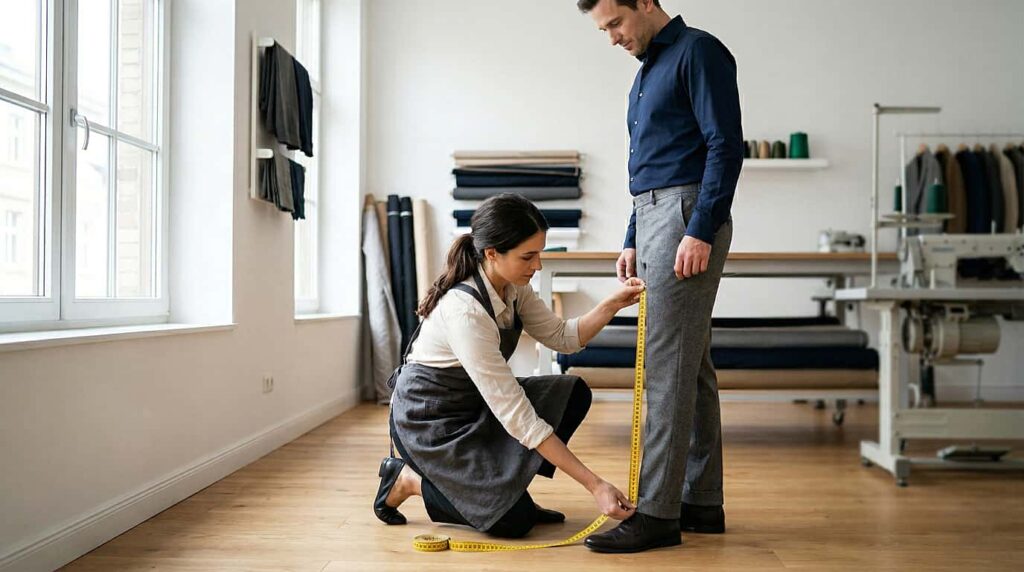
- Put on the trousers with the shoes you’ll most often wear with them.
- Get someone to help you pin the desired length — never guess the measurement.
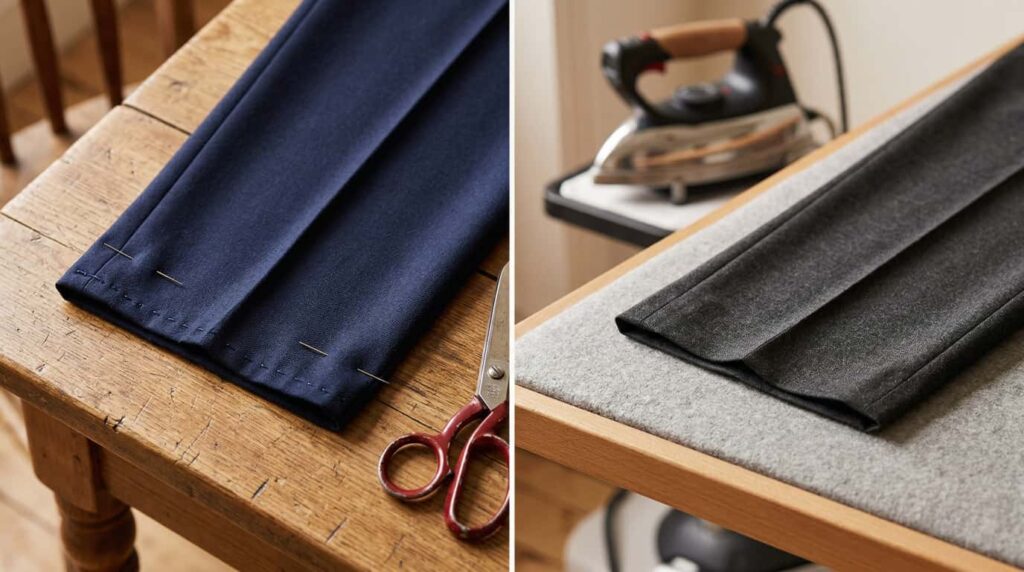
- Remove the trousers, mark the fold, and allow roughly 2.5 cm (1 inch) for the hem allowance.
- Trim the excess fabric, fold, press with an iron, and stitch.
Best for: Casual trousers, cotton chinos, everyday jeans, children’s clothes that will be outgrown soon, or any garment where you’re comfortable accepting a slight imperfection.
🧵 Professional Hemming — When It’s Worth It
A professional tailor doesn’t just shorten your trousers — they assess the fabric weight, choose the correct stitch type (a blind hem stitch for dress trousers, a chain stitch for denim, a hand-rolled hem for delicates), and ensure the fall of the fabric sits naturally. That’s the difference between trousers that look altered and trousers that look like they were made for you.
A professional is the right call when:
- The trousers are for work, an interview, a wedding, or any occasion where appearance matters.
- The fabric is delicate, lined, or slippery (wool suiting, silk, chiffon).
- You want the original hem of your jeans preserved (the “euro hem” technique).
- The garment was expensive and you don’t want to risk damaging it.
- You need the trousers tapered as well as shortened — not a DIY-friendly job.
- You simply don’t own the right tools or don’t have time.
Best for: Suit trousers, wool and silk garments, formal wear, expensive denim you want to keep looking factory-fresh, and anyone who values a flawless finish.
The honest truth: A simple trouser hem costs around £8–£15 at a professional tailor. For many people, that’s less than the cost of lunch. Unless sewing is a genuine hobby you enjoy, the time, tools, and risk of a botched job often make professional hemming the more sensible choice — especially for anything you’d wear outside the house.
Can Jeans Be Taken In at the Waist? Yes — Here’s What to Know
This is one of the most frequently searched tailoring questions online, and the answer is a firm yes — but with caveats. Taking in the waist of jeans is a standard alteration that skilled tailors perform regularly. However, it’s meaningfully more complex than hemming, and the quality of the result depends heavily on how much material needs to be removed and the method used.
How it’s done
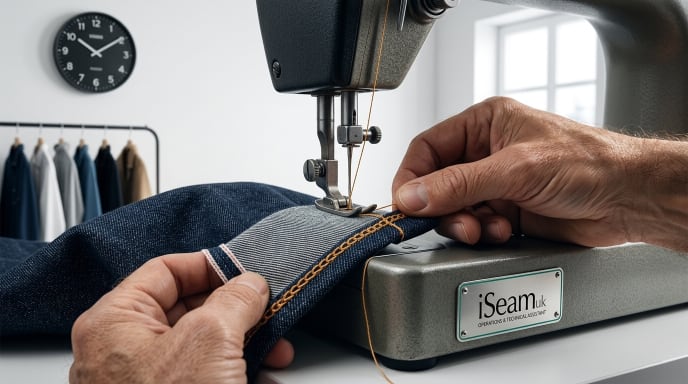
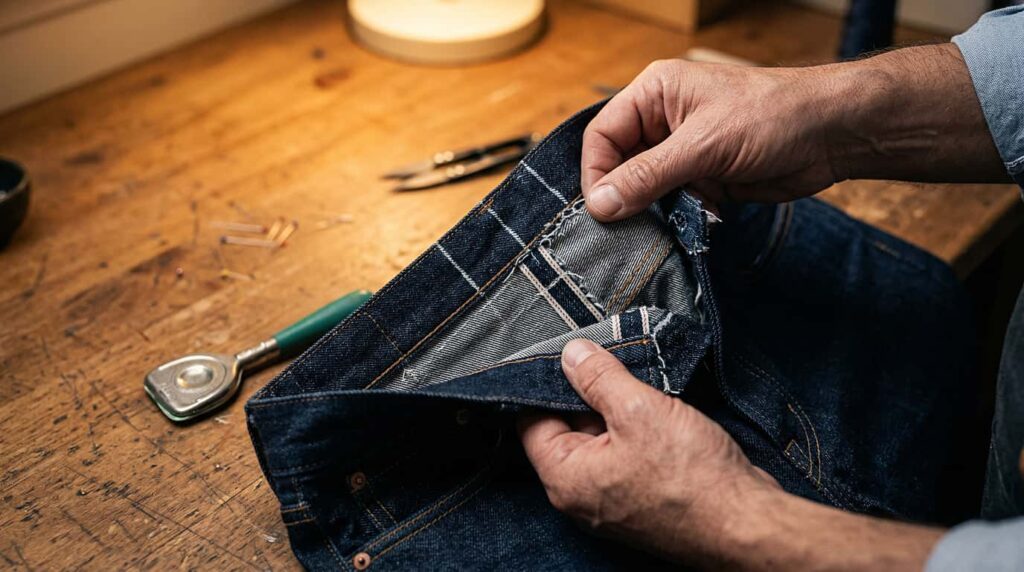
The most common and reliable method involves altering the centre back seam. The tailor opens the waistband at the back, takes in the seat seam to reduce the waist circumference, and then re-attaches and resizes the waistband to match. When done well, the result looks virtually indistinguishable from the original construction.
Some tailors use an alternative approach with darts — small V-shaped folds stitched into the back of the waistband and the yoke beneath it. This is quicker and cheaper, but the result is more visible and less refined.
Realistic limits
| Amount to Take In | Feasibility | Notes |
|---|---|---|
| Up to 1 inch (2.5 cm) | Straightforward | Clean result, minimal impact on proportions. |
| 1–2 inches (2.5–5 cm) | Very doable | Good result with an experienced tailor. Rear pockets may shift slightly closer together. |
| 2–3 inches (5–7.5 cm) | Possible but complex | May require additional adjustments to the seat and hip area. Proportions start to change. |
| 3+ inches (7.5+ cm) | Not recommended | Rear pockets crowd together, hip proportions distort. At this point, a different size is usually better value. |
Can you do it at home?
Technically, yes — if you have a domestic sewing machine and a heavy-duty denim needle. There are excellent tutorials online that walk through the process of taking in jeans from the back seam. However, working with denim is demanding. The multiple layers at the waistband (often six or more, especially near rivets) can challenge even industrial machines. Belt loops, the yoke panel, and the waistband itself all need careful disassembly and reassembly.
For most people, this is an alteration best left to a professional — particularly if the jeans cost more than the alteration fee. Expect to pay £20–£35 to have jeans taken in at the waist by a tailor in the UK.
What a Tailor Can (and Can’t) Do
People are often surprised by how much a skilled tailor can transform a garment — and occasionally disappointed by the limits. Here’s a practical overview:
✅ Tailors can usually:
- Shorten or lengthen trousers, skirts, and dresses
- Take in or let out the waist on trousers and skirts
- Taper trouser legs for a slimmer fit
- Take in the sides of jackets, dresses, and shirts
- Shorten or lengthen sleeves
- Replace zips on almost any garment
- Re-line a jacket or coat
- Adjust shoulder width (on some constructions)
- Repair tears, patch holes, and reinforce seams
❌ Tailors typically can’t:
- Make a garment more than 2 sizes larger (limited by seam allowance)
- Alter printed or patterned fabrics without visible misalignment
- Fully restructure a garment’s silhouette
- Fix colour damage, bleach stains, or heavy fabric wear
- Resize jeans more than 3 inches at the waist without distorting proportions
- Reduce the crotch rise significantly on jeans
- Resize complex knitwear
The golden rule: it’s almost always easier (and cheaper) to make a garment smaller than to make it bigger. When buying off-the-rack, if you’re between sizes, go for the larger one — a tailor can take it in, but letting out requires spare fabric that often isn’t there.
When Professional Alterations Are Worth Every Penny
Not every garment justifies a trip to the tailor. A £7 t-shirt from Primark probably isn’t worth a £15 alteration fee. But there are situations where professional tailoring isn’t just worth it — it’s transformative:
Job interviews and important events. First impressions are heavily influenced by fit. Trousers that break cleanly at the shoe, a jacket that follows the shoulders, sleeves that show the right amount of shirt cuff — these details communicate professionalism and attention to detail.
After weight changes. Lost or gained a stone? Rather than replacing an entire wardrobe, having key pieces altered is dramatically cheaper. A full trouser and shirt alteration might cost £30–50, versus £150+ for replacements.
Quality garments you love. If you own a well-made coat, a favourite pair of jeans, or a dress with sentimental value, a skilled alteration can extend its life by years. This is better for your wallet and better for the planet.
Vintage and second-hand finds. Charity shop gold often needs minor fit adjustments. A £12 blazer from a vintage shop plus a £25 alteration still costs a fraction of buying new — and you get something unique.
School uniforms. Children grow fast. Buying slightly large and having trousers hemmed or sleeves shortened can stretch a school uniform across multiple terms.

The Rise of Online Tailoring Services
One of the biggest barriers to getting clothes altered has always been convenience. Finding a good local tailor, making time to visit during shop hours, going back for fittings — it adds friction that many people simply give up on.
That’s changing. A growing number of platforms now let you order alterations online, post your garment to a professional tailor, and have it returned to your door — fully altered and ready to wear. It’s the same professional craftsmanship, without the need to find a tailor near you or rearrange your schedule.
The model is straightforward: you select the service you need (hem, waist adjustment, sleeve shortening, etc.), pay a fixed price upfront, and ship your Tailoring Item to the assigned tailor. The tailor completes the work and sends it back. No haggling, no guesswork about costs, no geographic limitations.
Need an alteration? Skip the search.
iSeam.uk connects you with professional tailors across the UK. Fixed prices, no surprises. Select your service, send your garment, and we’ll handle the rest.
Frequently Asked Questions
How much does it cost to hem trousers in the UK?
A standard trouser hem typically costs between £8 and £15 at most UK tailors. Lined trousers, suit trousers, or those requiring a blind hem stitch may cost slightly more. Jeans with an original hem preserved can be £12–£20.
Can you hem trousers without a sewing machine?
Yes. You can use a hand-sewing blind hem stitch (ideal for dress trousers) or iron-on hem tape for a temporary no-sew fix. Hand-stitching gives a more durable result and can look very professional with practice. Hem tape is convenient but typically only lasts a few washes.
Can a tailor take in jeans at the waist?
Yes. Most tailors can reduce the waist of jeans by up to 2–3 inches. The standard method involves opening and resizing the centre back seam and waistband. For best results, use a tailor experienced with denim — the fabric’s weight and construction require specific skills and equipment.
How long do clothing alterations take?
Simple alterations like hems and button replacements are usually completed within 3–5 working days. More complex work (taking in a jacket, multiple adjustments on a dress) can take 1–2 weeks. Rush services are available from many tailors for an additional fee.
Is it cheaper to alter clothes or buy new ones?
In most cases, altering is significantly cheaper. A £20 alteration on a £60 pair of trousers is far more economical than buying a replacement. Alteration also makes sense for high-quality items that would cost substantially more to replace. The exception is very cheap fast-fashion items, where the alteration fee may exceed the garment’s original price.
What should I wear when going for a fitting?
Wear the shoes you plan to pair with the garment — this is especially important for trouser hems, as even a small difference in heel height will change where the hem should fall. Wear the undergarments you’d normally wear with the outfit. And bring any specific preferences in mind (photos help).
Can I send my clothes to an online tailor?
Yes. Services like iSeam.uk let you order alterations online and post your Tailoring Item to a professional. The garment is altered and returned to your door. It’s a practical option when you don’t have a good local tailor or can’t easily visit in person.
Need a professional alteration without the hassle?
iSeam.uk — Fixed-price tailoring, delivered to your door.